PhD Candidate · Systems & Controls · UTK × ORNL
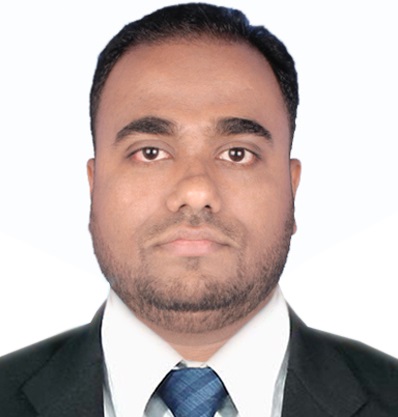
Abu Jafar
Md Muzahid
Autonomous Systems · Hierarchical Reinforcement Learning · Optimal Control
I develop hierarchical AI frameworks that integrate deep and multi-agent reinforcement learning with model predictive control and convex optimization — enabling connected and automated vehicles (CAVs) to coordinate safely and efficiently in mixed-traffic highway environments. My work spans algorithm design, SUMO/CARLA simulation, and collaboration with ORNL toward real-world validation of autonomous mobility systems.
I hold an M.S. in Mechanical Engineering from UTK (2025) and an M.S. in Soft Computing from Universiti Malaysia Pahang (2022), where I earned the 1st Place Excellent Publication Award and a Gold Medal at Malaysia Technology Expo. With 886 Google Scholar citations (h-index 14) and a 4.9/5.0 teaching effectiveness rating, I am actively seeking tenure-track faculty and research scientist positions beginning Spring 2027.
What I work on
Research Interests
Peer-reviewed work
Publications
Full list → Google Scholar · ResearchGate · ORCID 0000-0003-2344-7027 · Scopus
Academic background
Education
(exp. May 2027)
Advisor: Dr. Zhenbo Wang · Committee: Dr. Omer San (UTK), Dr. Chieh (Ross) Wang (ORNL)
Proposal defended: April 2026 · GPA: 3.83/4.0
Focus: Control systems, optimization, vehicle dynamics, advanced air mobility
Research Fellowship recipient · 1st Place Excellent Publication Award · Gold Medal, Malaysia Technology Expo 2022
Positions held
Research & Teaching Experience
Present
- Developing MARL-based corridor-wide CAV coordination framework for multi-ramp highway merging (Phase 3 of dissertation).
- Teaching ME 391 (Engineering Analysis) and AE 424 (Aerospace Structures); 4.9/5.0 student effectiveness rating.
- Mentoring 9 junior undergraduate and graduate researchers on RL and simulation methods.
- Leading weekly research meetings and co-supervising undergraduate capstone projects.
Dec 2025
- Designed and implemented hierarchical DRL + convex optimization framework for single-ramp CAV merging; published in Control Engineering Practice (Elsevier, 2025).
- Completed review paper on optimization-based CAV control; published in Journal of Systems Architecture (Elsevier, 2026).
- Contributed to NSF CAREER RISE-AAM (Award No. 2237215) on human–autonomy teaming in advanced air mobility.
- Defended PhD dissertation proposal: April 2026.
(ongoing)
- Collaborating on U.S. DOE-funded CAV energy efficiency research under the Applied Research for Mobility Systems group.
- Coordinating with Dr. Chieh (Ross) Wang on simulation-to-reality validation and energy modeling for autonomous vehicle control.
- Preparing for real-world testbed experiments at ORNL infrastructure.
(~11 years)
- Taught undergraduate-level courses in electronics, mathematics, computer science, and engineering fundamentals.
- Developed curriculum materials and assessment frameworks for 300+ students per year.
- Built strong foundation in pedagogy, technical communication, and mentorship that informs current 4.9/5.0 UTK teaching rating.
Technical expertise
Skills & Tools
| RL / AI Frameworks | Deep Reinforcement Learning (DRL) · Multi-Agent RL (MARL) · Hierarchical RL · Options Framework · Stable-Baselines3 · Ray RLlib · OpenAI Gymnasium · PPO · SAC · DDPG · PyTorch · TensorFlow / Keras |
| Control & Optimization | Model Predictive Control (MPC) · Convex Optimization · Pseudospectral Methods · Trajectory Optimization · Safety-Constrained Control · MATLAB / Simulink · Linear Quadratic Regulator (LQR) |
| Simulation Platforms | SUMO (Simulation of Urban MObility) · CARLA Simulator · HighwayEnv · Unity3D · Vehicle Dynamics Simulation · ITS Evaluation & Benchmarking |
| Programming & Dev | Python · MATLAB · C++ · R · SQL · Git / GitHub · LaTeX (Overleaf) · Jupyter Notebook · Google Colab · AWS |
| Research & Soft Skills | Scientific Writing (17 Q1 journals) · Peer Review · Graduate Teaching (ME 391, AE 424) · Mentorship (9 junior researchers) · Grant Writing · Technical Presentations · Cross-disciplinary Collaboration (ORNL) |
Recognition